
Reviewed · MALAGA MUSEUM TICKETS
Málaga: Museo del Automóvil y la Moda Ticket
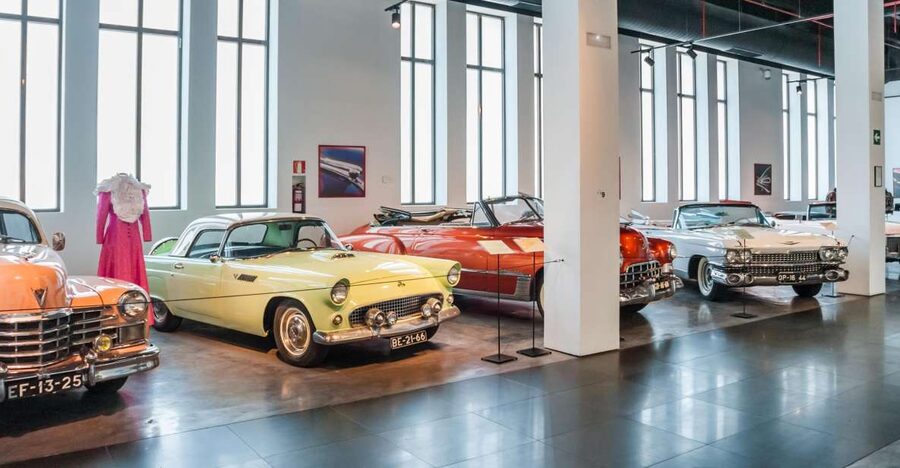
Málaga’s Automobile and Fashion Museum is not simply a room full of polished cars. It pairs each period of automotive design with vintage fashion and art, creating a visual story about how people wanted to travel, dress, and be seen. You’ll find rare early models, lavish Cadillacs, English classics, popular everyday cars, and machines built with alternative energy in mind.
I especially like the way the clothes help explain the cars rather than serving as an afterthought. I also like the chance to hear some of the engines run on Sunday at 12:30. The main drawback is location: La Tabacalera is outside Málaga’s old center, so you’ll need to allow time to get there, and 50 minutes may feel short if you read every display.
Key points to know before you go
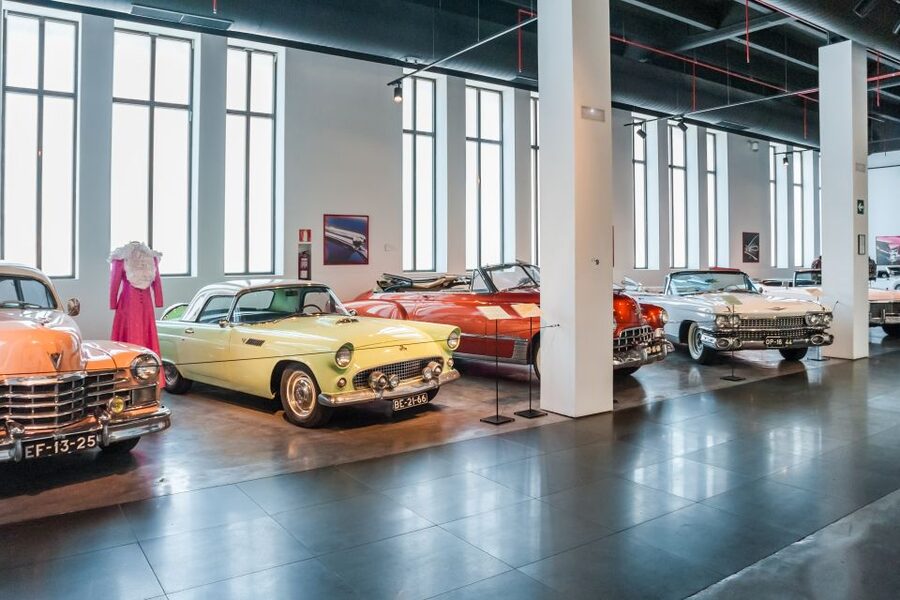
- Cars meet couture: Period dresses, designer clothing, posters, and art are placed beside cars from matching eras.
- A former tobacco factory: The museum occupies Málaga’s 1923 La Tabacalera building, an attractive setting with plenty of space.
- A broad collection: Expect dream cars, popular small cars, American models, Rolls-Royces, Jaguars, and unusual experimental vehicles.
- Sunday engine session: At 12:30 every Sunday, selected cars are started so you can hear their engines.
- Easy practical visit: Free parking, rest areas, accessible facilities, and free WiFi make the museum simple to fit into a Málaga day.
- Good value at $14: The price is reasonable for a focused museum visit, especially for families and mixed-interest groups.
Inside La Tabacalera, Málaga’s old tobacco factory
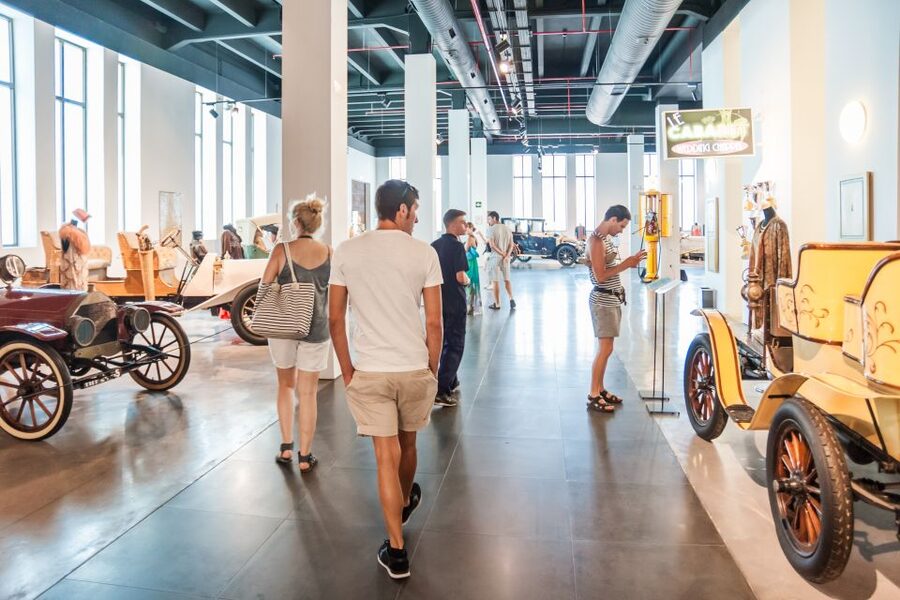
The setting gives this museum an immediate sense of place. La Tabacalera was built in 1923 as a tobacco factory and has since been adapted for cultural use. You are not entering a purpose-built showroom with rows of cars under harsh lights. The old industrial building gives the visit more character, and the broad interior helps the displays breathe.
The museum is at Avenida Sor Teresa Prat 15, in the 29003 area of Málaga. It is not in the historic center, so plan around the location rather than treating it as a quick stop between the cathedral and Alcazaba. The good news is that free parking is available on site, which is useful if you have a rental car or are traveling with children.
Inside, the displays are arranged in themed sections rather than one long timeline. That makes the visit easier to follow, though it also means you should pause at the signs to understand how one section connects to the next. The museum is well lit, cool, and spacious, with rest areas and amenities available.
The building and exhibition together make this a good choice when Málaga’s heat becomes tiring. You can spend an hour indoors without feeling packed into a narrow gallery. A small coffee shop outside adds another practical touch, though it may have queues during the busiest summer periods.
More Museum Tickets in Malaga:
- Skip the Line: Malaga Automobile and Fashion Museum Entrance Ticket
★ 4.5 · 379 reviews - Malaga: Gibralfaro Castle, Bullring and Port Segway Tour
★ 4.8 · 298 reviews - Malaga: Tour of Malagueta Bullring & Immersive Exhibition
★ 4.7 · 271 reviews
A walk through automotive design from early models to the future
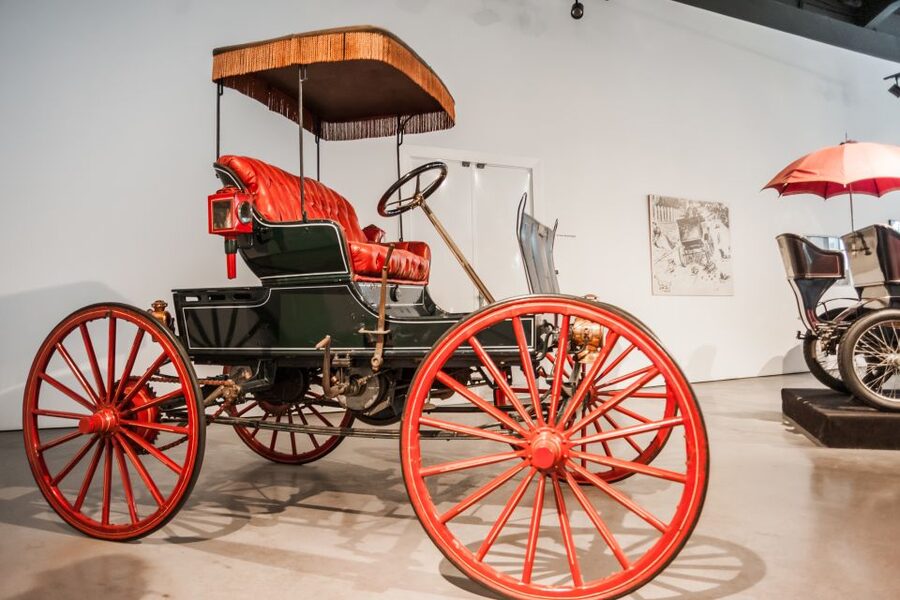
The central pleasure here is variety. You may begin with rare late nineteenth-century automobiles, then move into the bold styling of the 1920s, the extravagant American cars of the 1950s, and the sharper designs of later decades.
The museum places real attention on design rather than horsepower alone. You will see how body shapes, materials, colors, and interior details changed with public taste. The displays also show how cars became social symbols, from formal luxury vehicles to small popular models intended for ordinary daily use.
The early cars help establish how experimental the motorcar once was. At that point, designers were still working out what a car should look like and how it should function. Later sections feel more familiar, but the changes in proportion and styling remain easy to spot.
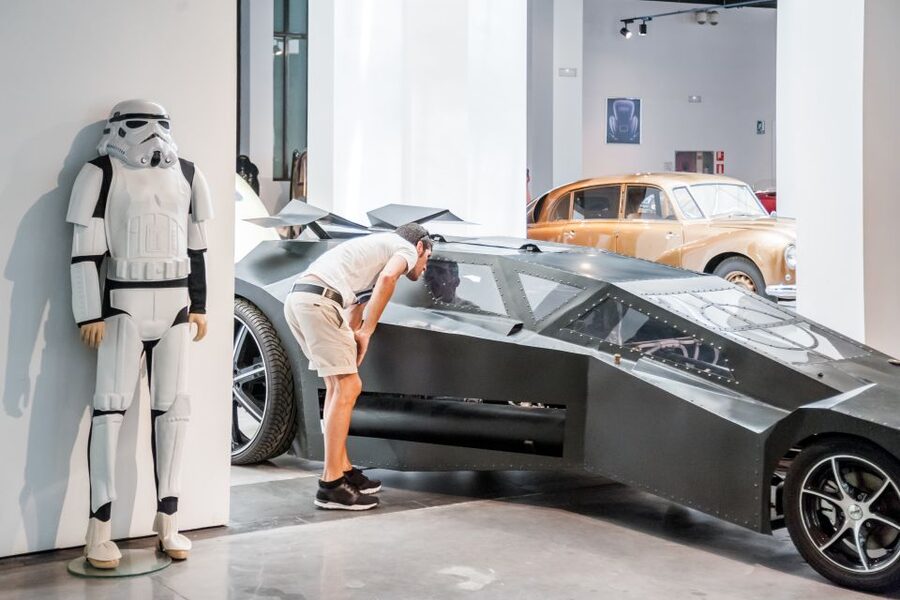
Look for the avant-garde cars that seemed ahead of their time. These are useful reminders that automotive design has never moved in a straight line. Some ideas become standard. Others remain unusual but influential.
The museum also includes vehicles designed to use alternative energy sources. This section adds a useful present-day question: how long have people been trying to solve the problems of fuel, efficiency, and movement? The subject is not presented only as a modern concern. It appears as part of a longer story of experimentation.
The American dream, with Cadillacs in the spotlight

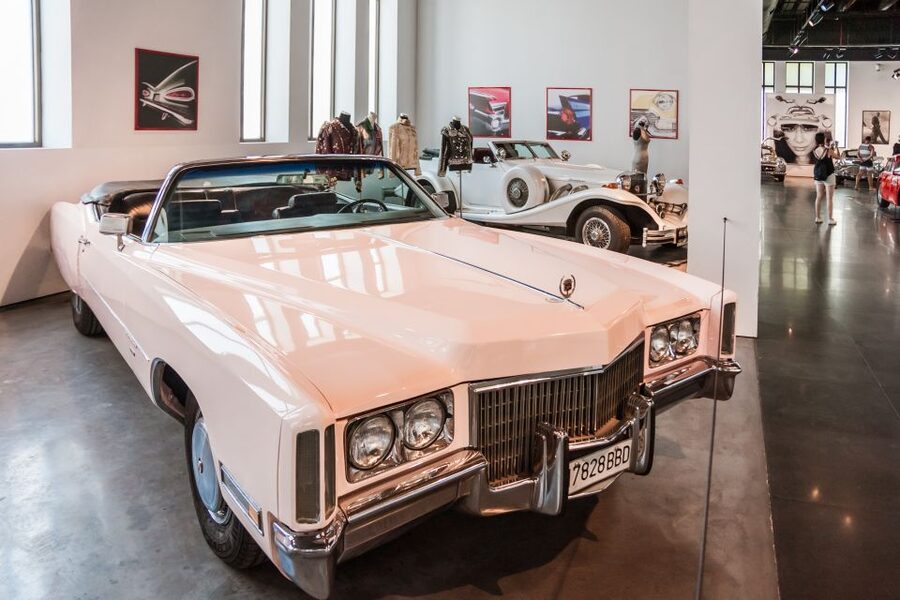
The American section is likely to be one of the most eye-catching parts of the museum. Large American models, including several Cadillacs, bring the visual language of the 1950s into sharp focus.
These cars were built to be noticed. Their size, chrome, sweeping lines, and confident styling reflect an era when the automobile represented prosperity and freedom. You do not need to be a car specialist to understand the appeal. The shapes are dramatic, and the surrounding fashion helps explain the social mood of the period.
This is also where the museum’s pairing of vehicles and clothing works particularly well. A car tells you about engineering and status, while a dress, suit, or accessory gives you a better sense of how people presented themselves at the time. Together, they turn the display into a scene rather than a collection of isolated objects.
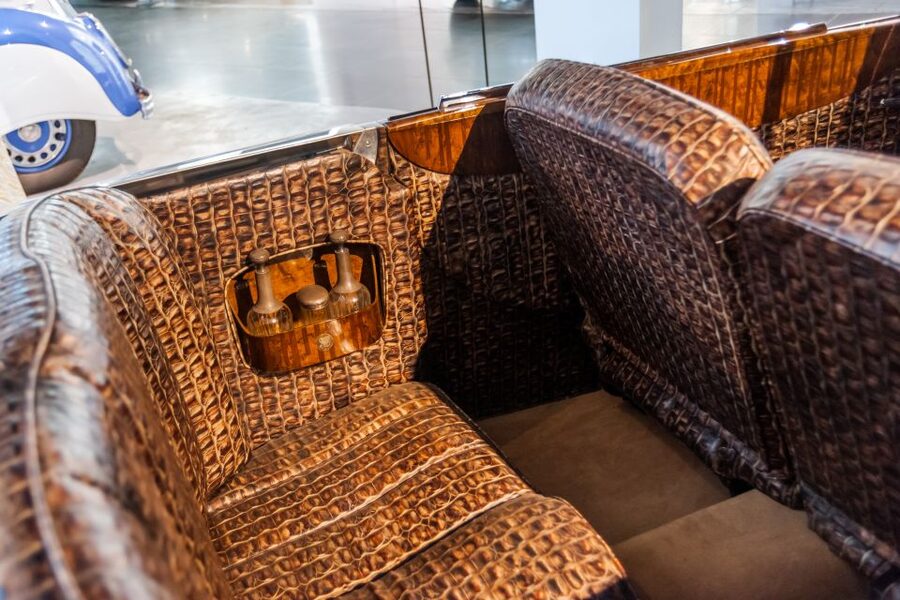
The cars are generally presented in exceptionally clean condition. If you enjoy restoration, you will appreciate the finish and care given to the collection. If you are not especially interested in mechanics, the color, scale, and theatrical styling still give you plenty to look at.
Rolls-Royce, Jaguar, and the English style
The English heritage section shifts the mood. Rolls-Royce suggests formality and luxury, while Jaguar brings a more sporting character. These vehicles show how national style can shape a car’s personality.
I like this part because it avoids treating automotive history as one single march toward faster and newer models. The English cars are about restraint, craft, and status as much as performance. Their design language is different from the exuberance of the American vehicles, and the contrast makes both sections more interesting.
The museum’s use of period clothing makes the differences clearer. You can compare the polished elegance associated with a Rolls-Royce to the sharper, more energetic image connected with a Jaguar. The displays are not only about the machines themselves. They are about the people who owned them, the occasions when they were used, and the public image they carried.
Short information panels beside the vehicles provide the basic facts, including the year of manufacture and a brief account of each car. This is enough to keep you oriented without forcing you to read long blocks of text. If you want a more guided explanation, an optional guided tour is available, but check that your museum entrance is also included when booking the guided option.
A few more Malaga half-days to compare
- Malaga: Hammam Al Ándalus Entry Ticket with Massage
★ 4.7 · 2,498 reviews - Benalmádena: Mount Calamorro Cable Car Ticket
★ 4.5 · 1,901 reviews - Nerja: Caves of Nerja Entry Ticket with Audio Guide
★ 4.6 · 1,616 reviews - Málaga: 3-Hour Complete Walking Tour with Tickets
★ 4.5 · 976 reviews
Everyday cars that bring the collection back to earth
For all the glamour, the museum makes room for ordinary favorites. One section brings together nine popular cars from different periods, including an Austin Seven, a Morris Minor, and a 1960s Velorex.
This is an important part of the visit. Dream cars and luxury marques can make automobile history feel distant from daily life. The popular models show what families and ordinary drivers actually used, or what they hoped to own.
The Austin Seven and Morris Minor are especially useful comparisons with the larger luxury cars. Their appeal lies in simplicity, practicality, and recognizability. The Velorex adds a more unusual note and reminds you that not every memorable vehicle fits a standard idea of what a car should be.
Families often get more from this section than expected because children can connect with smaller and stranger vehicles more easily than with formal luxury models. It also gives the collection a better balance. You are not looking only at expensive objects made for display.
Fashion, art, and the cars’ visual partners
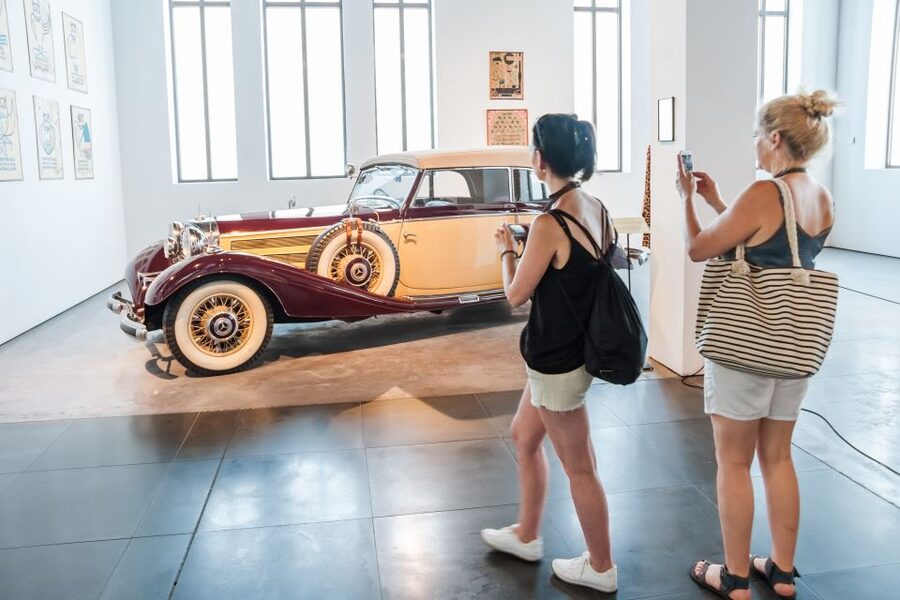
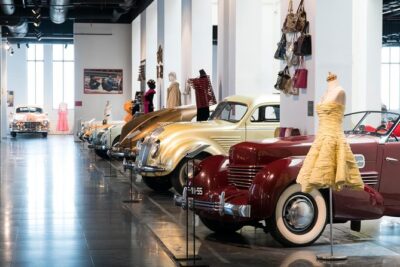
The fashion collection is the museum’s most distinctive feature. Period garments are placed alongside vehicles from the same era, and the result is closer to a design exhibition than a conventional transport museum.
You will see vintage clothing and designer pieces that help set the period for each car. The combination works because both fashion and automobile design respond to changing ideas about modernity, elegance, speed, and social status.
Some displays include wall posters and artwork, while other areas use mannequins seated in the cars. The mannequins may not appeal to everyone. Some people find them helpful because they give the vehicles a human scale, while others prefer to see the cars without figures inside them.
The museum has also used interactive fashion elements. A virtual room featuring Dior dresses lets you experiment with the clothing digitally, which can be a fun change of pace for children and adults. It is one of the details that helps the museum appeal beyond dedicated car enthusiasts.
I would allow extra time here if fashion, textiles, or visual design interest you. The clothing is not merely decoration. It provides a second route into the collection, and it is the reason a mixed group can enjoy the visit together instead of one person waiting while another studies engines.
Sunday at 12:30: hear the engines run
If you can arrange your visit for Sunday, aim for the Running the Engines activity at 12:30. Selected vehicles are started, allowing you to hear their engines and get a better sense of their mechanical power.
Static cars can be beautiful, but sound changes the experience. An engine turning over gives you a clearer connection with the machines as working vehicles rather than museum objects. The activity is brief enough to fit into a normal visit, but it adds something you cannot get from photographs or display panels.
This is the one timing detail worth planning around. The general visit lasts about 50 minutes, but you may want to give yourself a little flexibility if the engine session is important to you. The information provided does not specify which cars will run on a particular Sunday, so treat it as a chance to hear selected vehicles rather than a guaranteed demonstration of one specific model.
How much time and money should you allow?
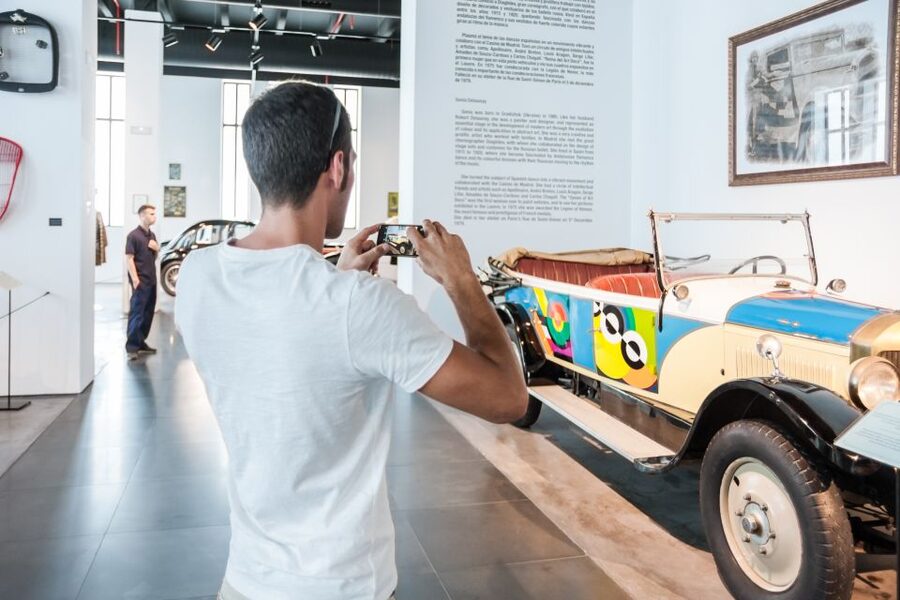
The listed price is $14 per person, and the stated duration is 50 minutes. At that price, I consider the museum good value, particularly because the admission covers access to the full collection and free parking is included.
Fifty minutes is enough for a purposeful visit. You can see the main themes, enjoy the major car groups, and take in the fashion displays without rushing too badly. If you read every panel, take many photographs, or plan around the Sunday engine session, you may want more time.
The value improves for groups with different interests. A car enthusiast can focus on makes, models, restoration, and engines. Someone interested in clothing can spend more time with the period garments and designer pieces. Children may prefer the unusual cars, the colorful American models, or the interactive fashion display.
An optional guided tour can add professional commentary, but the independent visit is suitable if you prefer to move at your own pace. The displays include short histories and manufacturing dates, so you will not be left without basic context.
Practical details for a smoother visit
The museum is adapted for seniors and disabled visitors, with easy parking and rest areas. Special tours are available for people with sensory limitations. These are useful details to confirm in advance if they matter for your group.
You can use a free WiFi area on site. Large bags and luggage are not allowed, and indoor smoking is prohibited. Swimwear is also not permitted, which is worth knowing if you are combining the museum with a beach day.
Bring your passport or ID card if requested, and bring a student card or disability card if you plan to use the relevant identification. The cancellation terms allow a full refund when you cancel at least 24 hours ahead, and reserve-now, pay-later booking can help if your Málaga schedule is still shifting.
Do not expect a large museum shop selection to be guaranteed. Collection books have sometimes sold out, and there is no online or mail-order service for them. If you want a record of the visit, take photographs where permitted.
Who will enjoy this museum most?
This is an easy recommendation for car enthusiasts, but it is not limited to them. The museum works particularly well for couples or families whose interests do not line up perfectly. The fashion, art, and social context give non-specialists a reason to keep looking.
It also suits visitors who want a manageable indoor attraction rather than a full-day museum. The collection is substantial enough to feel worthwhile, but not so large that you need to plan your entire Málaga visit around it.
The main limitation is that the museum is outside the old center. If you have only a short time in Málaga and want to remain near the cathedral, Roman Theatre, and Alcazaba, the journey may not fit comfortably. If you have a free hour, a car, or an interest in design, the trip makes more sense.
Should you book the Málaga Automobile and Fashion Museum?
Book it if you want a well-presented mix of cars, clothing, and art, especially if your group includes both car fans and people who are less interested in engines. The $14 admission is fair, free parking adds value, and the Sunday 12:30 engine session is a worthwhile bonus.
Skip it only if you have very limited time in Málaga or want a museum located directly in the historic center. For most visitors with room in their schedule, this is a distinctive and easygoing stop. It gives you classic cars, practical models, couture, American excess, English elegance, and a former tobacco factory setting in one compact visit.
FAQ
Where is the Automobile and Fashion Museum in Málaga?
The museum is at Avenida Sor Teresa Prat 15, 29003 Málaga, Spain, inside the former La Tabacalera tobacco factory.
How much does admission cost?
The listed price is $14 per person.
How long does a visit take?
The stated duration is 50 minutes. You may need longer if you want to read all the information panels, take photographs, or attend the Sunday engine activity.
Is parking available?
Yes. Free parking is available at the museum.
Can I visit independently?
Yes. You can explore the collections on your own, or choose an optional guided tour.
Is the guided tour included automatically?
The guided tour is included only when that option is selected. If you choose the guided tour, also make sure you have purchased museum admission.
When can I hear the cars’ engines?
The Running the Engines activity takes place every Sunday at 12:30. Selected vehicles are started so you can hear their engines.
Is the museum accessible for seniors and disabled visitors?
The facilities are adapted for seniors and disabled visitors, with easy parking and rest areas. Special tours are available for people with sensory limitations.
What items are not allowed inside?
Large bags and luggage are not allowed. Smoking indoors and swimwear are also prohibited.
Just added around Malaga
- e-Bike (Self-Guided) Setenil Circular – 41km Easy★ 5.0 · 11 reviews
- e-Bike (Self-Guided) & Winery tour – 20km Easy★ 5.0 · 6 reviews
- Night theatrical visit to the English cemetery★ 4.2 · 5 reviews
- Ronda Private Full Day Wine Tour★ 4.5 · 8 reviews
- 2h E-bike tours+1day extra in Malaga★ 5.0 · 28 reviews
- Wine & Tapas tour by electric bike (e-bike) including Ronda pickup (half day)★ 5.0 · 33 reviews
- Yacht ride in Puerto Banús★ 5.0 · 26 reviews
- Tour the Sanctuary and Walk with the Donkeys and Share their Love★ 5.0 · 13 reviews
Malaga Museum Tickets, compared.
Skip the Line: Malaga Automobile and Fashion Museum Entrance Ticket
Read our review →
Gibralfaro Castle, Bullring and Port Segway Tour
Read our review →
Tour of Malagueta Bullring & Immersive Exhibition
Read our review →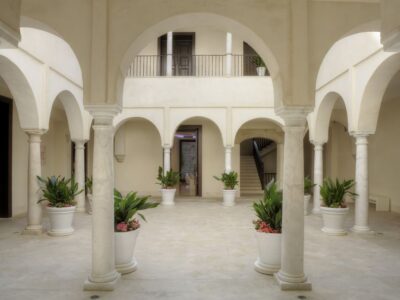


Centre Pompidou Malaga Ticket and City Audio Guide
Read our review →
Browse the lists this tour appears in