
Reviewed · MALAGA WALKING TOURS
Málaga: 3-Hour Complete Walking Tour with Tickets
Málaga’s best sights are packed into a compact historic center, and this tour makes a smart first introduction. You begin at the Roman Theatre, climb through the Alcazaba, then walk the old town before finishing inside the Cathedral of the Incarnation. The Alcazaba is the star: its courtyards, defensive walls, and views give you the clearest sense of Málaga’s long Roman, Moorish, and Christian story.
I like the three included admissions, since you do not have to queue separately for the Roman Theatre, Alcazaba, or Cathedral. I also like the guides’ lively approach. Dani, Fabiola, Maria, and Juan Carlos have all been praised for clear explanations, humor, and patience with questions. The main drawback is pace and access: this is a walking tour with slopes and uneven stone, and it can run beyond three hours if the group is large or a site is delayed.
Key points at a glance
- The Alcazaba gets the most attention, with about 45 minutes inside its grand Moorish fortification and panoramic views over Málaga.
- Three major sights are included, the Roman Theatre, Alcazaba, and Cathedral of the Incarnation.
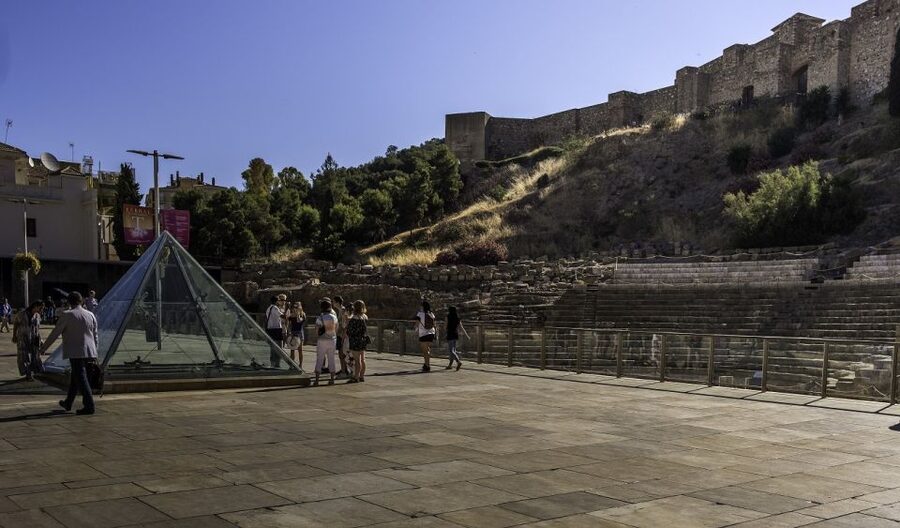
- The walk begins at the glass pyramid on Calle Alcazabilla, marked by an orange umbrella.
- Guides bring the past to life, often adding humor, local stories, and practical suggestions for food and museums.
- The tour ends at La Manquita, Málaga’s unfinished Cathedral, so you can continue exploring the old center afterward.
- Comfortable shoes matter, and the route is not suitable for people with mobility impairments.
Why this three-hour route works well in Málaga
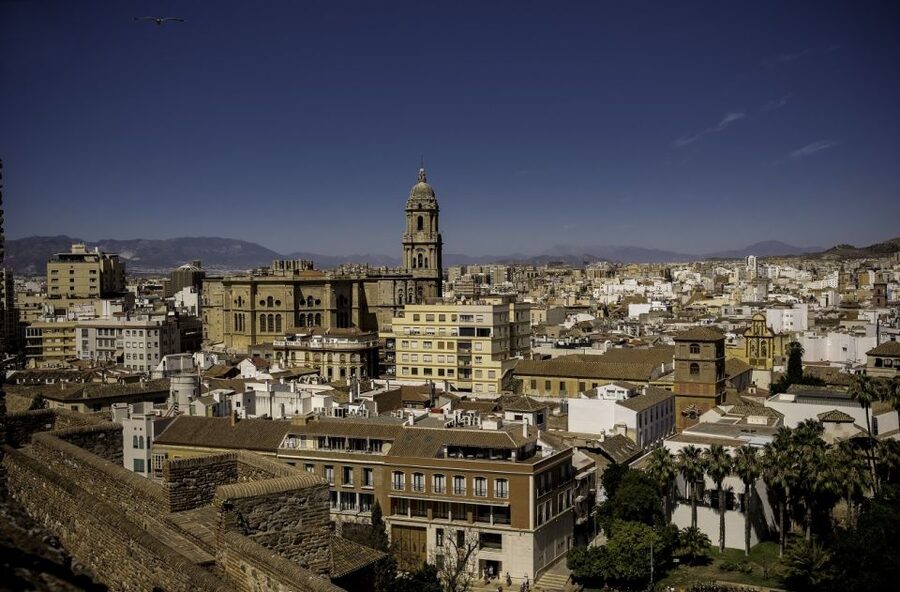
Málaga can look simple on a map. The port, old center, Roman Theatre, Alcazaba, and Cathedral all sit close together. Yet the city’s story is layered, and the remains are not always easy to read on your own. A Roman monument appears below a Moorish fortress. A Christian cathedral occupies the site of the former Great Mosque. Streets that now lead to tapas bars once formed part of a much older city.
This tour links those pieces in a sensible order. You start outdoors at the Roman Theatre, move uphill into the Alcazaba, then descend into the historic center. The final stop is the Cathedral, where the guide can connect Christian Málaga with the Islamic city that came before it.
That order also saves time. You are not crisscrossing the center between attractions, and admission to the three main sites is included in the $37 price. For a first morning or afternoon in Málaga, I consider that strong value, especially if you want context rather than a quick look at the buildings.
The tour is conducted in English or Spanish. Groups of more than 10 people receive audio equipment, though one person found that the equipment was not always available. If you are in a larger group, stay near the guide and mention it promptly if you cannot hear.
More Walking Tours in Malaga:
- Malaga Bike Tour – Old Town, Marina & Beach
★ 4.7 · 1,150 reviews - Málaga: Cathedral, Alcazaba, Roman Theater Walking Tour
★ 4.7 · 315 reviews - Málaga: Historic Center Tour with Local Guide
★ 4.9 · 162 reviews
Meeting beneath the glass pyramid
The starting point is the Pirámide de Cristal, or Crystal Pyramid, on Calle Alcazabilla. Look for the orange umbrella. This is a busy part of central Málaga, so identify the meeting point before the start time and allow a few minutes to find the correct guide.
The orange umbrella is useful, but several guides may be using similar umbrellas at the same time. One participant had trouble working out which guide belonged to the group. I would confirm the tour name and language as soon as you arrive rather than simply joining the nearest cluster.
There is no hotel pickup. You make your own way to the meeting point, and the tour finishes at the Cathedral of the Incarnation. That central ending is convenient. You can continue toward the old town, return to the port, stop for lunch, or visit another nearby museum without arranging transport.
The first few minutes are also a good time to tell the guide if you have hearing concerns or need a slower pace. The walk is generally described as unhurried, but conditions can change with group size, weather, and questions.
The Roman Theatre and Málaga’s Roman beginnings
The Roman Theatre is the first formal stop, with about 30 minutes of guided attention. Built in the first century, it is the main surviving remnant of the Roman city of Malacca. For centuries, it lay hidden underground, which makes its position beside the Alcazaba especially striking.
You will not simply see a freestanding ruin in an empty field. The theatre sits at the foot of the later fortress, showing how Málaga grew upward and outward over many centuries. The guide helps you read the structure, explain its Roman role, and understand why the remains were not visible for so long.
Thirty minutes is enough for a useful introduction, though not enough for an extended archaeological visit. If Roman sites are your main interest, you may want extra time here on another day. For most people, the value is the connection between the theatre and the buildings that follow.
This stop also eases you into the tour. You are still on level ground, and the guide establishes the broad timeline before the route becomes more demanding. Listen for the transition from Roman Malacca to the later Islamic city, because that change gives the Alcazaba its proper setting.
Climbing through the Alcazaba
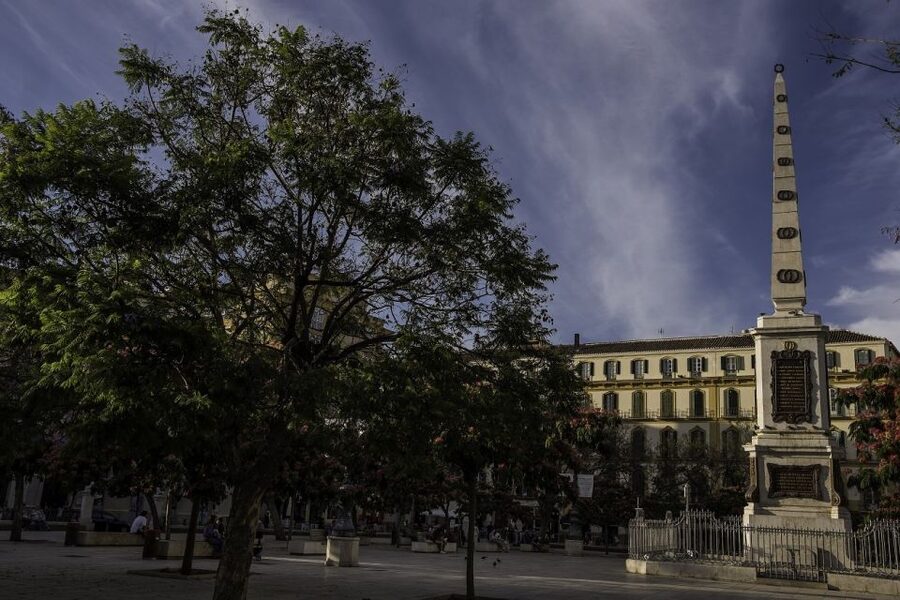
The Alcazaba receives about 45 minutes, and this is the strongest part of the route. Built in the 11th century on the slopes of Gibralfaro Mountain, it served as both a palatial residence and a defensive fortification. Its position above the Roman Theatre is not accidental. The builders used the hillside to protect the city and control the approaches below.
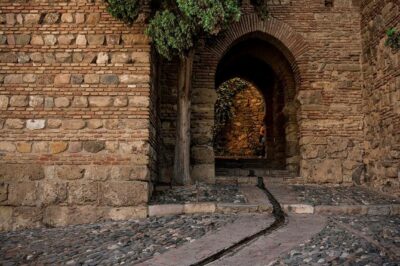
Inside, expect walls, gates, courtyards, and changing views across Málaga. The attraction is not one single room. It is the way the route moves through a fortified palace, with defensive design and refined details appearing side by side.
The panoramic views are a major reason to visit. From the higher sections, you can look across the city and toward the coast. The guide’s explanation helps you understand why the site was placed here, rather than treating the viewpoint as just a photo stop.
The Alcazaba is also where comfortable footwear becomes essential. You may encounter slopes, steps, and uneven surfaces. The route is not suitable for people with mobility impairments, and anyone who dislikes hills should consider that carefully before booking.
Forty-five minutes passes quickly. The guide must balance architecture, military purpose, local stories, and the needs of the group. People who want a slow, detailed examination of every courtyard may find the visit brief. Still, the guided time gives you a useful framework, and you can return independently if the Alcazaba captures your interest.
A few more Malaga half-days to compare
- Malaga City Tour 3 Hour Historical Segway Adventure
★ 5.0 · 100 reviews - Off-road buggy tour Sierra de Mijas buggy 3h
★ 5.0 · 68 reviews - Malaga City Tour: 3-Hour Historical Segway Adventure
★ 4.9 · 57 reviews - 3 Hours Boat Tour along the Marbella Coast
★ 5.0 · 56 reviews
A walk through Málaga’s old center
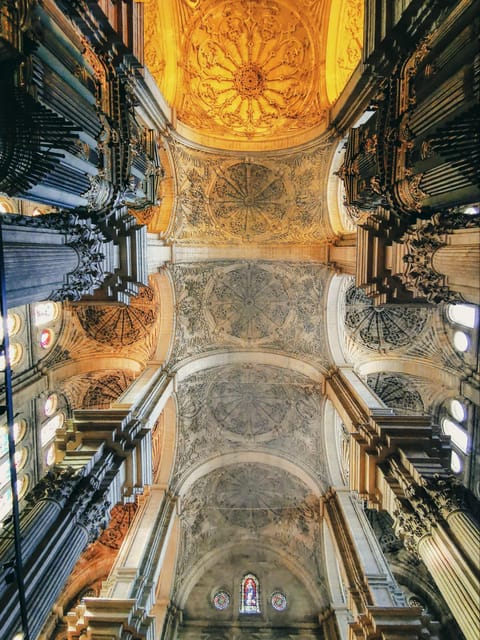
After the Alcazaba, the group strolls through some of the most popular streets in the historic center. This part is less about entering another monument and more about placing the major sights in the life of present-day Málaga.
The route includes views of Bodega Bar El Pimpi, one of the city’s best-known traditional meeting places, and the Picasso Museum of Málaga. These are exterior references rather than separate included visits, so do not expect time inside the museum as part of the three-hour program.
That distinction matters when planning your day. The tour gives you orientation, names the places worth returning to, and lets you decide which ones deserve a separate visit. It is especially helpful if Málaga is new to you and you want to avoid spending your first hours wandering without a plan.
The walking section is also where guides add personality. Dani has been praised for humor and for managing a large group without leaving people behind. Fabiola is known for storytelling that mixes major events with smaller local details. Maria has been described as energetic, warm, and willing to answer questions. These individual styles vary, but the tour depends heavily on having a guide who can keep the group together while making the streets feel connected to the past.
One useful benefit is local advice. A guide may point out museums, nearby attractions, or restaurants for later. That is not a substitute for a food tour, since meals and drinks are not included, but it can help you shape the rest of your stay.
Inside Málaga Cathedral, La Manquita
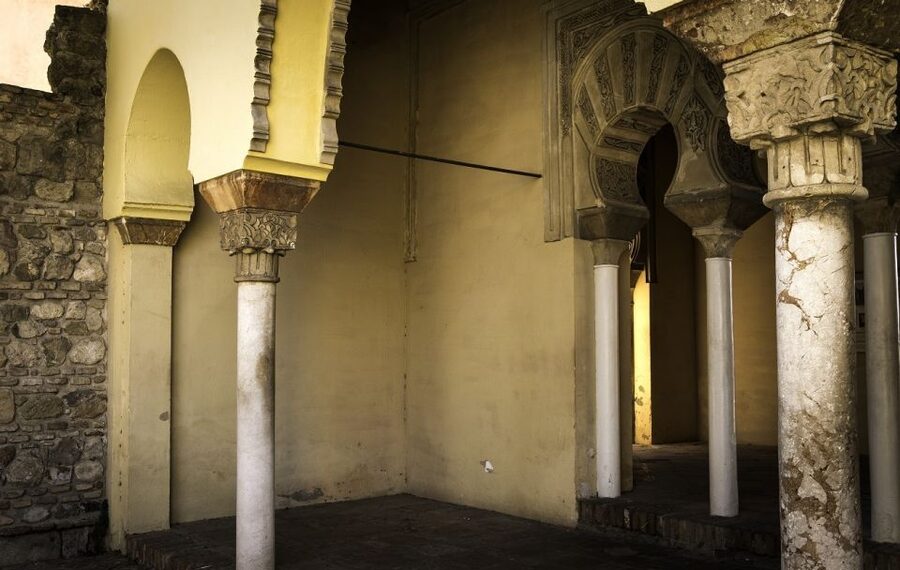
The tour ends at the Cathedral of the Incarnation, known locally as La Manquita, or the One-Armed Lady. The nickname refers to its unfinished state. Construction was closely tied to the earlier Great Mosque, and that connection makes the Cathedral a fitting final stop after the Roman and Islamic sites.
The Cathedral brings the tour’s timeline into the Christian period. Its incomplete design is not merely an odd detail. It helps explain why Málaga’s most important religious building looks different from the original plan and why local identity is tied to both what was built and what was left unfinished.
Admission is included, which adds real value. The Cathedral can be more expensive and less convenient to arrange as a separate stop, especially during a short visit. The guide’s explanation also gives the interior a clearer place in the city’s story than a quick walk through with no context.
Timing can be affected by services or private events. On one occasion, a wedding delayed entry, and the guide adjusted the route and returned to the Cathedral afterward. That kind of flexibility is helpful, but it also shows why you should not schedule a flight, train, or tightly timed reservation immediately after the tour.
The stated duration is three hours, yet one participant had to leave because the tour ran longer than planned. I would allow a little extra time, especially if you have an evening departure or another fixed booking.
Guide style and the size of the group
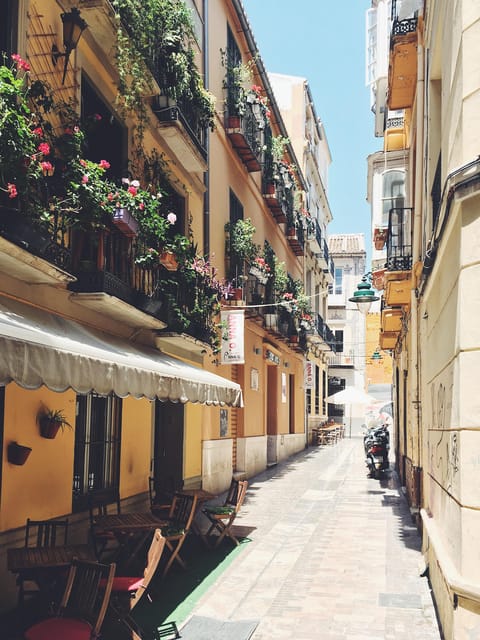
The strongest feature of this experience is the guiding. You are not only being walked from one ticketed entrance to another. You receive a spoken thread connecting Roman Malacca, the Moorish fortress, Málaga’s old streets, and the unfinished Cathedral.
The best guides use humor without turning the tour into a comedy show. Dani has been singled out for making historical facts easy to follow, while Fabiola and Maria have been praised for warmth and enthusiasm. A guide such as Juan Carlos has also been described as organized and professional. Names can change by date, so you should not book solely to get one particular person.
Large groups bring trade-offs. A skilled guide can keep the pace steady and include questions, but you may need to position yourself near the front to hear clearly. Audio equipment is listed for groups larger than 10, though it may not always be supplied. If you prefer a quiet, highly personal visit, a private tour would likely suit you better, but this group option costs less.
The pace is usually manageable rather than hurried. It is suitable for someone who wants to see the main sights in one block of time, but less suitable if you prefer long pauses for photography or independent wandering.
Is $37 good value?
At $37 per person, the price is reasonable for a three-hour guided visit with entry to three major sites. The Alcazaba and Cathedral alone make the cost easier to justify, and the Roman Theatre adds a third important stop without requiring separate ticket planning.
You are also paying for interpretation. Málaga’s monuments are close together, but proximity does not explain their connections. A guide helps you see why the Roman Theatre, Alcazaba, and Cathedral belong in one route.
The value is best for first-time visitors, cruise passengers with limited time, and anyone who wants a clear introduction before exploring alone. If you already know Málaga well, or if you have visited all three sites, the tour may repeat familiar ground.
Food, drinks, hotel pickup, and drop-off are not included. Plan to eat before or after, and remember that the final stop is the Cathedral rather than your accommodation.
Who should book this walk?
I would choose this tour if you want the main historic sights handled in one efficient route, with admission included and a live guide in English or Spanish. It works particularly well on your first day, when you need orientation and a sense of which places deserve more time.
It also suits solo visitors. The group structure gives you company, and the guides are used to answering questions and helping people feel included. Families with older children may appreciate the mix of ruins, fortress walls, views, and stories, provided everyone can manage the walking.
I would hesitate if you have limited mobility, need a guaranteed short visit, or want a slow art-focused tour. The route involves slopes and uneven ground, the group may be large, and the finish can run past the advertised three hours. Wear comfortable shoes, bring water, and avoid placing a fixed appointment too close to the end.
Free cancellation is available up to 24 hours before the start, and you can reserve now and pay later. Those terms are useful if your Málaga plans may shift, but the main decision is simpler: do you want a lively overview or several quiet hours at one monument?
My verdict: a strong first look at Málaga
Book this tour if you want Málaga’s essential historic sights explained in the right order. The Roman Theatre sets the Roman foundation, the Alcazaba provides the finest views and most memorable visit, and La Manquita completes the city’s religious and architectural story.
The main cautions are the walking demands, possible group noise, and a schedule that may stretch beyond three hours. With those points in mind, $37 is a fair price for a well-shaped introduction, especially when you value the included tickets and a guide who can make the old stones readable.
FAQ
Where does the Málaga walking tour start?
It starts at the Pirámide de Cristal, or Crystal Pyramid, on Calle Alcazabilla. Find the guide with the orange umbrella.
Where does the tour finish?
The tour finishes at the Cathedral of the Incarnation, Málaga’s La Manquita.
Which attractions are included?
The tour includes the Roman Theatre, the Alcazaba of Málaga, and the Cathedral of the Incarnation.
Are admission tickets included?
Yes. Entry to the Roman Theatre, Alcazaba, and Cathedral is included in the tour price.
What languages are available?
The live guide is available in English or Spanish.
How long does the tour last?
The advertised duration is three hours. You should allow extra time, since the tour may run longer depending on the group and site conditions.
Is the tour suitable for people with mobility impairments?
No. The experience is not suitable for people with mobility impairments, and comfortable shoes are recommended because the route includes walking through historic areas and the Alcazaba.
Just added around Malaga
- e-Bike (Self-Guided) Setenil Circular – 41km Easy★ 5.0 · 11 reviews
- e-Bike (Self-Guided) & Winery tour – 20km Easy★ 5.0 · 6 reviews
- Night theatrical visit to the English cemetery★ 4.2 · 5 reviews
- Ronda Private Full Day Wine Tour★ 4.5 · 8 reviews
- 2h E-bike tours+1day extra in Malaga★ 5.0 · 28 reviews
- Wine & Tapas tour by electric bike (e-bike) including Ronda pickup (half day)★ 5.0 · 33 reviews
- Yacht ride in Puerto Banús★ 5.0 · 26 reviews
- Tour the Sanctuary and Walk with the Donkeys and Share their Love★ 5.0 · 13 reviews
Malaga Walking Tours, compared.


Cathedral, Alcazaba, Roman Theater Walking Tour
Read our review →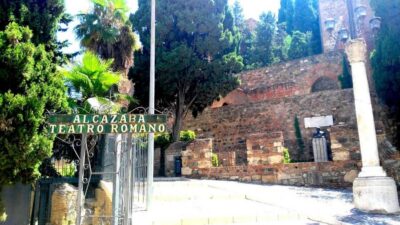
Malaga Private Walking Tour, Alcazaba & Catamaran Cruise
Read our review →
Guided Walking Tour of the Old Town of Frigiliana
Read our review →Malaga Private Walking Tour, Alcazaba & Catamaran Cruise
Read our review →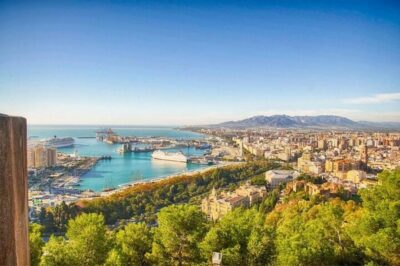
1.5-Hour Roman Theater and Alcazaba Castle Walking Tour
Read our review →Browse the lists this tour appears in